
Dal dishes · 8 varieties featured
Dal dishes
Dal, sambar, rasam, rajma, chole and khichdi made with lentils and pulses, a main source of protein and fibre in Indian vegetarian meals. Compare each variety's weight-management rating, calories per serving and where to find it
The short answer
Across the 8 varieties of dal dishes we compare, a serving has about 113 to 410 kcal: Rasam is the lightest (about 113 kcal for 1 bowl, about 280 g) and Khichdi the heaviest (about 410 kcal for 1 bowl, about 400 g). For weight management, Rasam and Sambar rate best (4.0/5, good fit), judged on calories per gram, protein and fibre for the calories, and the size of a regular serving.
Reviewed by Deepu Oommen on 6 Nov 2026 · How we review
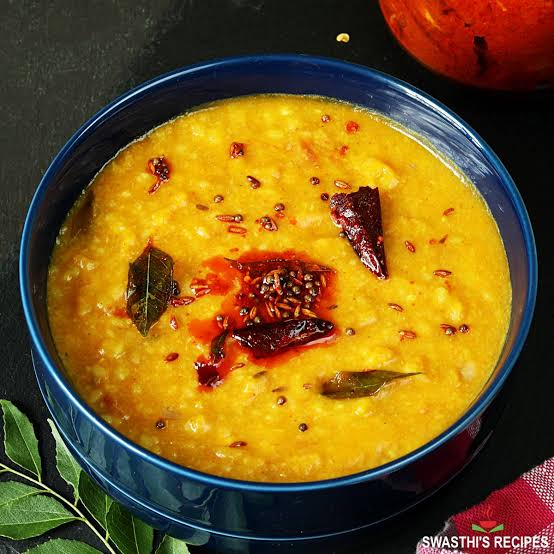
Average weight-management rating
Average of the 8 varieties, rounded to the nearest half star. Varieties range from 3.0 to 4.0.
Find Dal dishes near youOpens Google Maps. NutriPedia does not see your location.
- Calories per serving
- 113 to 410 kcal
- Best for weight management
- Rasam and Sambar · 4.0/5
- Lightest
- Rasam · 113 kcal
- Varieties compared
- 8
How many calories are in dal dishes?
| Variety | Serving | Calories | For weight management |
|---|---|---|---|
| Rasam1 bowl (about 280 g) | 1 bowl (about 280 g) | 113 kcal | 4.0/5 · Good fit |
| Sambar1 bowl (about 330 g) | 1 bowl (about 330 g) | 169 kcal | 4.0/5 · Good fit |
| Toor dal, cooked1 bowl (about 210 g) | 1 bowl (about 210 g) | 217 kcal | 3.5/5 · Good fit |
| Masoor dal1 katori (about 220 g) | 1 katori (about 220 g) | 218 kcal | 3.5/5 · Good fit |
| Chole (chana masala)1 bowl (about 200 g) | 1 bowl (about 200 g) | 232 kcal | 3.5/5 · Good fit |
| Moong dal, cooked1 katori (about 250 g) | 1 katori (about 250 g) | 255 kcal | 3.0/5 · Moderate fit |
| Rajma1 bowl (about 260 g) | 1 bowl (about 260 g) | 290 kcal | 3.0/5 · Moderate fit |
| Khichdi1 bowl (about 400 g) | 1 bowl (about 400 g) | 410 kcal | 3.0/5 · Moderate fit |
Which dal dish is best for weight management?
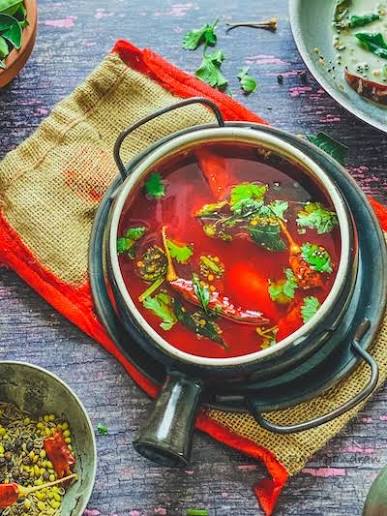
Rasam
South India
4.0 / 5Rated 4 out of 5. Good fit for weight managementHow this is worked out
- Calories per gram (35%)
- 0.40 kcal · 100/100
- Protein per 100 kcal (25%)
- 4.5 g · 45/100
- Fibre per 100 kcal (20%)
- 2.5 g · 83/100
- Portion (20%)
- 113 of 200 kcal (side dish) · 93/100
- Per 100 g
- 40.4 kcal · P 1.8 g · C 5.5 g · F 1.2 g
Score 81.3 of 100 = 4.0 stars. Calculated from a standard recipe using IFCT 2017 (ICMR-NIN) and USDA FoodData Central values. Source: Recipe: Hebbar's Kitchen, Easy Tomato Rasam (Rasam Recipe), 2017.
Find near you113 kcal
1 bowl (about 280 g)
About 20 min of brisk walking uses similar energy
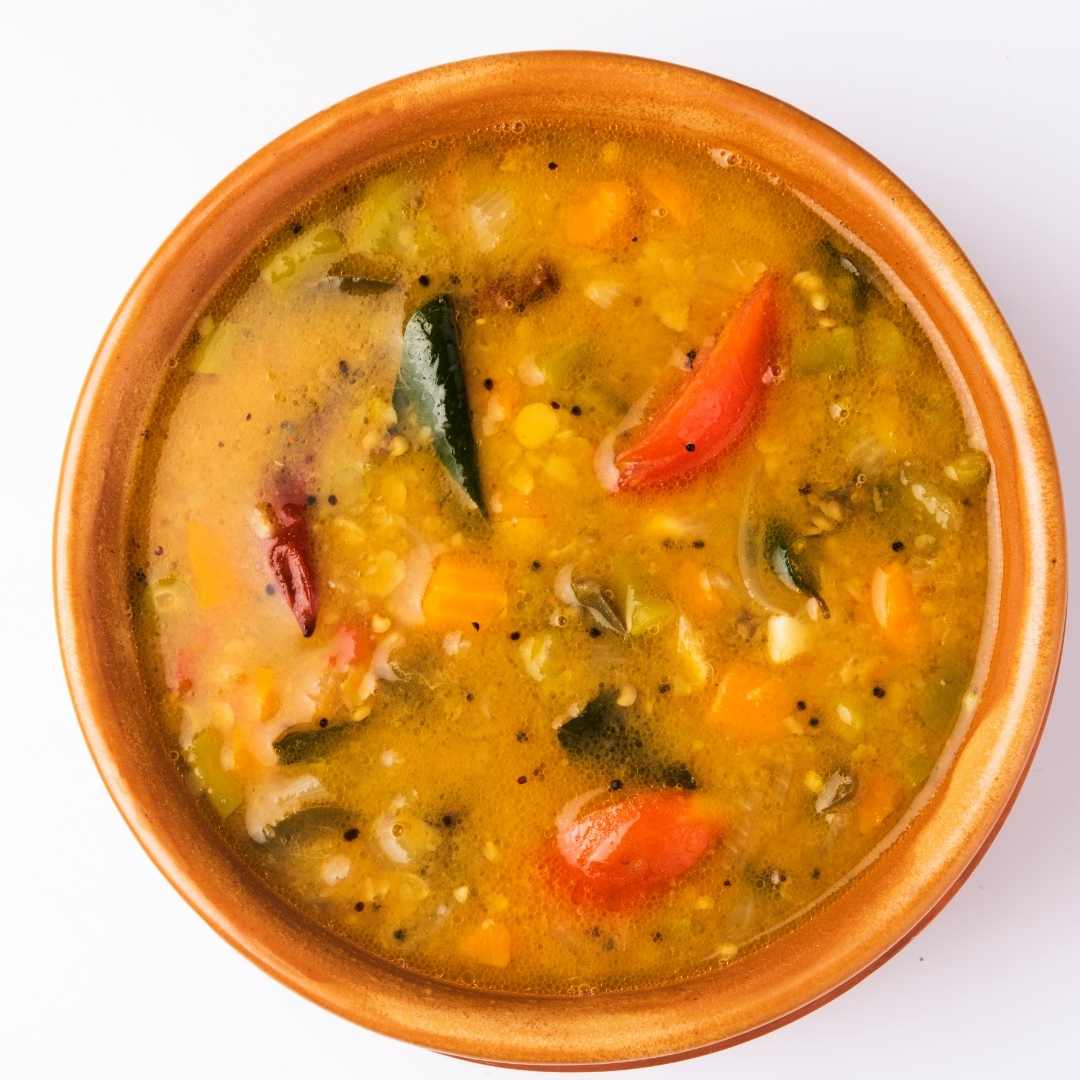
Sambar
South India
4.0 / 5Rated 4 out of 5. Good fit for weight managementHow this is worked out
- Calories per gram (35%)
- 0.51 kcal · 100/100
- Protein per 100 kcal (25%)
- 4.7 g · 47/100
- Fibre per 100 kcal (20%)
- 3.7 g · 100/100
- Portion (20%)
- 169 of 200 kcal (side dish) · 65/100
- Per 100 g
- 51.3 kcal · P 2.4 g · C 7.9 g · F 1 g
Score 79.8 of 100 = 4.0 stars. Calculated from a standard recipe using IFCT 2017 (ICMR-NIN) and USDA FoodData Central values. Source: Recipe: Swasthi's Recipes, Sambar Recipe.
Find near you169 kcal
1 bowl (about 330 g)
About 30 min of brisk walking uses similar energy
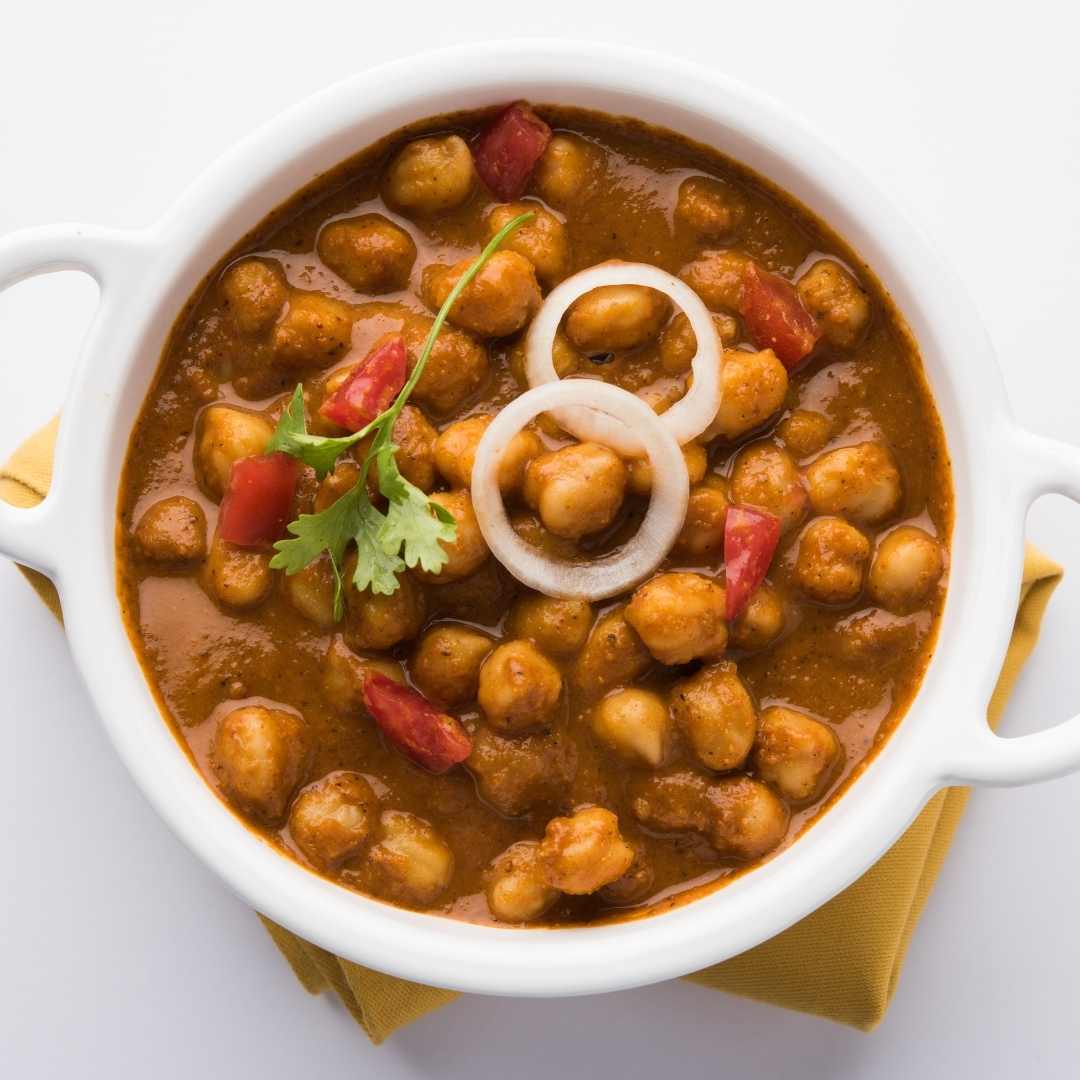
Chole (chana masala)
North India
3.5 / 5Rated 3.5 out of 5. Good fit for weight managementHow this is worked out
- Calories per gram (35%)
- 1.16 kcal · 83/100
- Protein per 100 kcal (25%)
- 4.0 g · 40/100
- Fibre per 100 kcal (20%)
- 5.6 g · 100/100
- Portion (20%)
- 232 of 200 kcal (side dish) · 34/100
- Per 100 g
- 116.2 kcal · P 4.6 g · C 11.8 g · F 5.4 g
Score 65.9 of 100 = 3.5 stars. Calculated from a standard recipe using IFCT 2017 (ICMR-NIN) and USDA FoodData Central values. Source: Recipe: Swasthi's Recipes, Chole Recipe (Punjabi Chole Masala).
Find near you232 kcal
1 bowl (about 200 g)
About 45 min of brisk walking uses similar energy
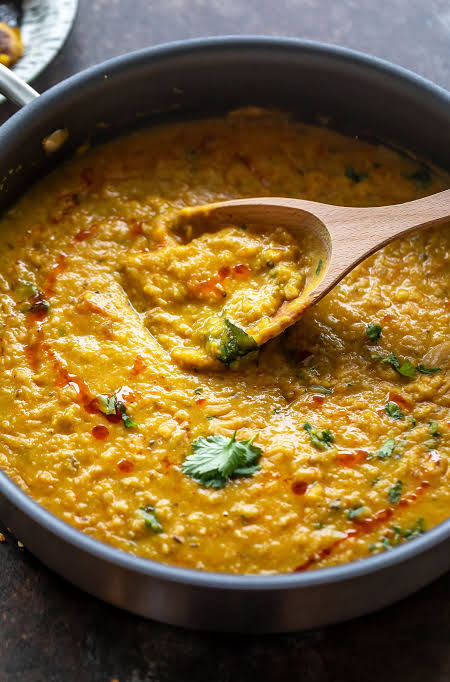
Masoor dal
Across India
3.5 / 5Rated 3.5 out of 5. Good fit for weight managementHow this is worked out
- Calories per gram (35%)
- 0.99 kcal · 89/100
- Protein per 100 kcal (25%)
- 5.2 g · 52/100
- Fibre per 100 kcal (20%)
- 2.6 g · 88/100
- Portion (20%)
- 218 of 200 kcal (side dish) · 41/100
- Per 100 g
- 99 kcal · P 5.1 g · C 11.5 g · F 3.5 g
Score 69.6 of 100 = 3.5 stars. Calculated from a standard recipe using IFCT 2017 (ICMR-NIN) and USDA FoodData Central values. Source: Recipe: Swasthi's Recipes, Masoor Dal Recipe, 2017.
Find near you218 kcal
1 katori (about 220 g)
About 40 min of brisk walking uses similar energy
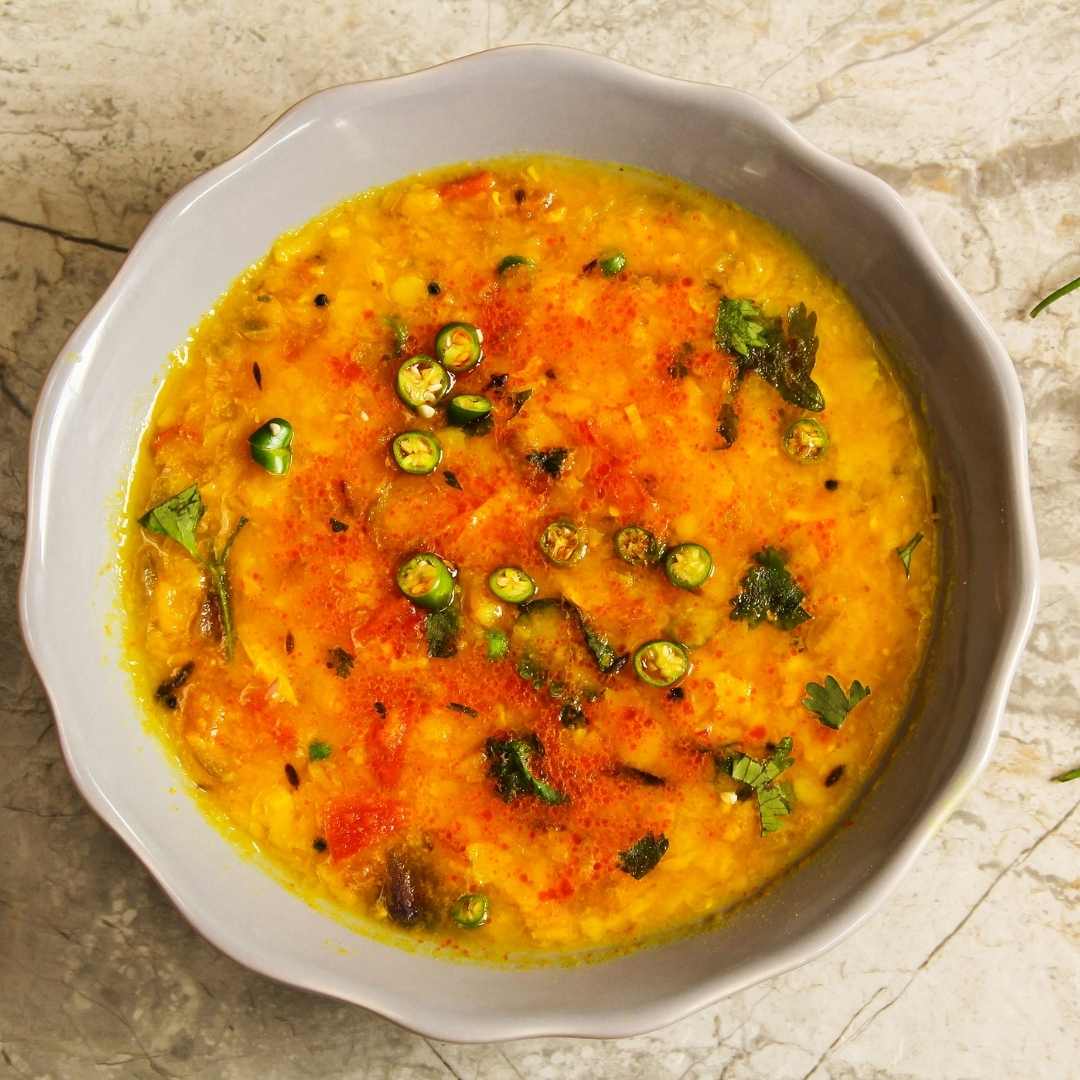
Toor dal, cooked
Across India
3.5 / 5Rated 3.5 out of 5. Good fit for weight managementHow this is worked out
- Calories per gram (35%)
- 1.03 kcal · 87/100
- Protein per 100 kcal (25%)
- 5.2 g · 52/100
- Fibre per 100 kcal (20%)
- 2.4 g · 81/100
- Portion (20%)
- 217 of 200 kcal (side dish) · 41/100
- Per 100 g
- 103.4 kcal · P 5.4 g · C 14.2 g · F 2.6 g
Score 68 of 100 = 3.5 stars. Calculated from a standard recipe using IFCT 2017 (ICMR-NIN) and USDA FoodData Central values. Source: Recipe: Tarla Dalal, Basic Toor Dal Recipe.
Find near you217 kcal
1 bowl (about 210 g)
About 40 min of brisk walking uses similar energy
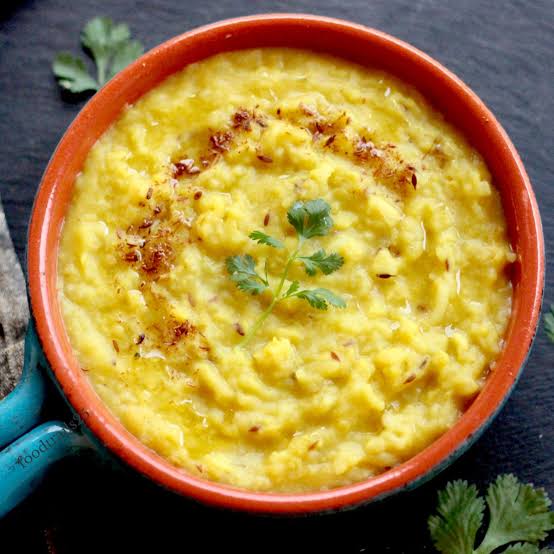 3.0 / 5Rated 3 out of 5. Moderate fit for weight management
How this is worked out
- Calories per gram (35%)
- 1.02 kcal · 88/100
- Protein per 100 kcal (25%)
- 3.5 g · 35/100
- Fibre per 100 kcal (20%)
- 1.6 g · 52/100
- Portion (20%)
- 410 of 550 kcal (main meal) · 76/100
- Per 100 g
- 102.4 kcal · P 3.6 g · C 14.9 g · F 3 g
Score 64.9 of 100 = 3.0 stars. Calculated from a standard recipe using IFCT 2017 (ICMR-NIN) and USDA FoodData Central values. Source: Recipe: Swasthi's Recipes, Khichdi Recipe (Moong Dal Khichdi), 2017.
Find near you410 kcal
1 bowl (about 400 g)
About 1 hr 20 min of brisk walking uses similar energy
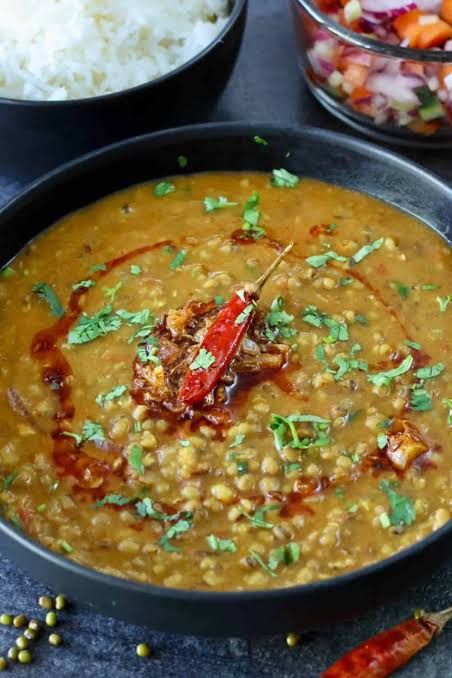
Moong dal, cooked
Across India
3.0 / 5Rated 3 out of 5. Moderate fit for weight managementHow this is worked out
- Calories per gram (35%)
- 1.02 kcal · 88/100
- Protein per 100 kcal (25%)
- 4.2 g · 42/100
- Fibre per 100 kcal (20%)
- 2.1 g · 69/100
- Portion (20%)
- 255 of 200 kcal (side dish) · 23/100
- Per 100 g
- 102 kcal · P 4.3 g · C 10.3 g · F 4.7 g
Score 59.4 of 100 = 3.0 stars. Calculated from a standard recipe using IFCT 2017 (ICMR-NIN) and USDA FoodData Central values. Source: Recipe: Swasthi's Recipes, Moong Dal Recipe, 2017.
Find near you255 kcal
1 katori (about 250 g)
About 50 min of brisk walking uses similar energy
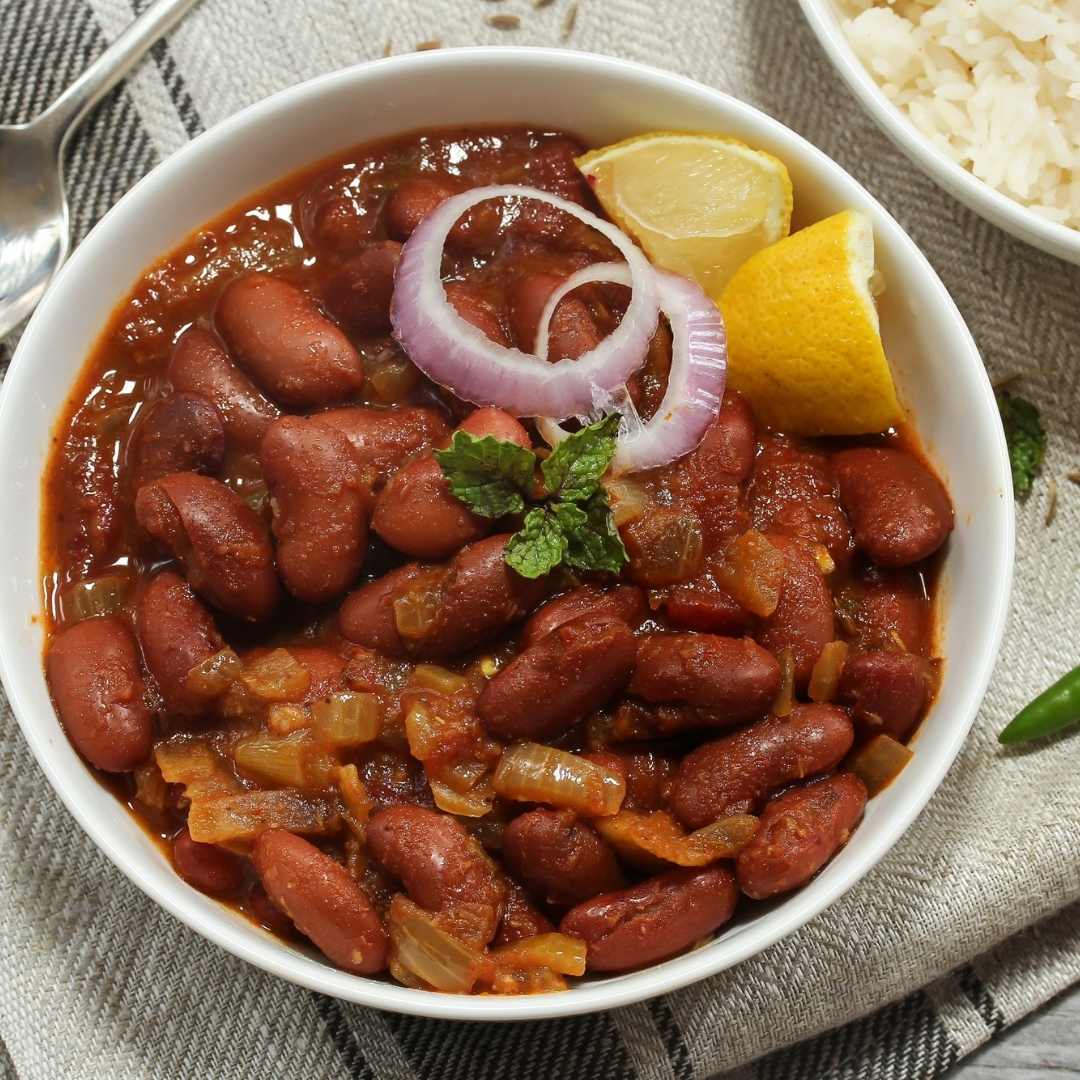
Rajma
North India
3.0 / 5Rated 3 out of 5. Moderate fit for weight managementHow this is worked out
- Calories per gram (35%)
- 1.11 kcal · 85/100
- Protein per 100 kcal (25%)
- 4.4 g · 44/100
- Fibre per 100 kcal (20%)
- 4.1 g · 100/100
- Portion (20%)
- 290 of 200 kcal (side dish) · 5/100
- Per 100 g
- 111.5 kcal · P 4.9 g · C 13.3 g · F 4.1 g
Score 61.7 of 100 = 3.0 stars. Calculated from a standard recipe using IFCT 2017 (ICMR-NIN) and USDA FoodData Central values. Source: Recipe: Swasthi's Recipes, Rajma Recipe (Rajma Masala).
Find near you290 kcal
1 bowl (about 260 g)
About 55 min of brisk walking uses similar energy
Walking times are for a 70 kg adult at a brisk pace (about 5.6 km/h). Enter your weight in How much should I eat? to make them yours.
Walking energy: Compendium of Physical Activities, 2011. Calories are estimates; restaurant portions vary. Ratings scored on 2026-11-03.
Are dal dishes good for weight management?
On average, the 8 varieties of dal dishes we compare rate 3.5/5 (good fit) for weight management, but they differ a lot. Rasam and Sambar are the better everyday choices; Rajma (3.0/5, moderate fit) is better kept to a smaller portion or an occasional meal. Adding vegetables, dal or curd on the side and keeping to one serving matters as much as which variety you pick.
Common questions about dal dishes
How many calories are in dal dishes?
About 113 to 410 kcal per serving, depending on the variety. Rasam is the lightest and Khichdi the heaviest.
Which dal dish has the fewest calories?
Rasam, with about 113 kcal for 1 bowl, about 280 g.
Which dal dish is best for weight management?
Rasam and Sambar rate best at 4.0/5, good fit. Ratings combine calories per gram, protein and fibre per 100 kcal, and the size of a regular serving, each scored against fixed limits.
How much walking uses the energy in a serving of dal dish?
For a 70 kg adult walking briskly, about 20 min for Rasam and 1 hr 20 min for Khichdi.
Is dal good for weight management?
Yes. Dal gives protein and fibre that help you feel full. Keep the tadka (ghee or oil) to a spoon.
Which dal has the most protein?
Most dals give similar protein per katori; rajma and chole also give more fibre.
About these ratings
Each rating combines four things, each scored from 0 to 100 against fixed limits: calories per gram (35%), protein per 100 kcal (25%), fibre per 100 kcal (20%), and the size of a regular serving compared with what that kind of dish should provide in a meal (20%). More than 15 g of added sugar in a serving caps the rating at 2 stars. A higher rating does not mean a dish causes weight loss. See the methodology for the formula.