
Ambur and Vaniyambadi, Tamil Nadu · Main meal
Ambur biryani (mutton)
Also called Ambur mutton biryani, Arcot biryani, Vaniyambadi biryani, Ambur star biryani, biriyani
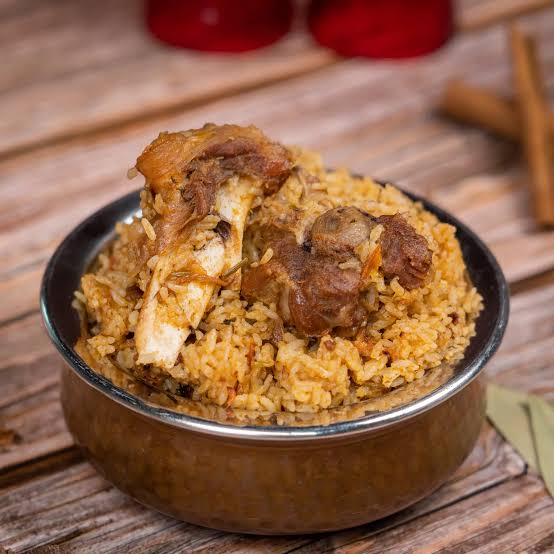
A Tamil Nadu biryani from Ambur: mutton cooked with onions, tomatoes, curd, mint and red chilli, then layered with part-cooked rice and steamed. It uses little ghee and is usually served with brinjal curry and onion raita.
The short answer
Ambur biryani (mutton) has about 798 kcal in a regular serving (1 plate, about 530 g), with 40.8 g of protein and 6.4 g of fibre. It rates 2.0/5 (limited fit) for weight management: it is low in calories for its weight, but a regular serving is a large portion and it has little fibre for its calories.
Reviewed by Deepu Oommen on 7 Nov 2026 · How we review
- Calories per serving
- 798 kcal
- 1 plate (about 530 g)
- For weight management
- 2.0 / 5Rated 2 out of 5. Limited fit for weight management
- Protein and fibre
- 40.8 g · 6.4 g
- per serving
- Brisk walking
- About 2 hr 30 min
- uses similar energy (70 kg adult)
What's in ambur biryani (mutton)?
Raw weights for one serving (1 plate, about 530 g), from the standard recipe
- Mutton, 145 g
- Basmati rice, 98 g
- Ghee, 10 g
- Onion, 77 g
- Fried onions, 8 g
- Oil in the fried onions, 1 g
- Garlic, 4 g
- Ginger, 6 g
- Tomato, 51 g
- Curd, 31 g
- Coriander leaves, 2 g
- Mint leaves, 2 g
- Green chillies, 2 g
- Lemon juice, 3 g
How is ambur biryani (mutton) made?
Preparation 45 min · Cooking 75 min
- 1Wash and soak the rice for 30 minutes.
- 2Fry the whole spices in ghee, add the chopped onions and cook until soft, then add ginger and garlic pastes and cook until golden.
- 3Add tomatoes and salt and cook until soft, then stir in the chilli powder.
- 4Add the mutton and sear it on high heat, then add curd, coriander, mint and green chillies; cover and cook until the mutton is about three-quarters done.
- 5Boil the rice in salted water until three-quarters cooked, drain it and spread it over the mutton.
- 6Drizzle ghee and lemon juice, add herbs, ginger and fried onions, seal and cook on low heat for 10 to 15 minutes, then rest before serving.
Ambur biryani (mutton) nutrition
| Nutrient | Per serving (1 plate, about 530 g) | Per 100 g |
|---|---|---|
| Energy | 798 kcal | 151 kcal |
| Protein | 40.8 g | 7.7 g |
| Carbohydrate | 89.6 g | 16.9 g |
| Fat | 30.2 g | 5.7 g |
| Fibre | 6.4 g | 1.2 g |
Calculated from a standard recipe (based on a recipe by Sanjeev Kapoor: Ambur Biryani, serves 4) using IFCT 2017 (ICMR-NIN) and USDA FoodData Central values for the raw ingredients, divided by the weight of the cooked dish (2061 g for the whole recipe). Salt and dry spices are left out. The regular serving is the average portion in three chefs' recipes: Sanjeev Kapoor, Ambur Biryani 515 g, Swasthi's Recipes, Ambur Star Biryani 458 g and Essence of Life (food blog), Ambur Mutton Biriyani, Vaniyambadi style 630 g. Food composition: Longvah T, Ananthan R, Bhaskarachary K, Venkaiah K. Indian Food Composition Tables 2017, National Institute of Nutrition (ICMR), Hyderabad. How we calculate nutrition facts. Home and restaurant versions vary with the oil, rice and portion used.
Is ambur biryani (mutton) good for weight management?
It rates 2.0/5, a limited fit, because it is low in calories for its weight, but a regular serving is a large portion and it has little fibre for its calories.
- Calories per gram (35% of the rating)1.50 kcal · 73/100
- Protein per 100 kcal (25% of the rating)5.1 g · 51/100
- Fibre per 100 kcal (20% of the rating)0.8 g · 27/100
- Portion (20% of the rating)798 of 550 kcal (main meal) · 5/100
Each part is scored against fixed limits, then weighted. A higher rating does not mean a food causes weight loss. How the rating works
Lighter ways to have ambur biryani (mutton)
- Have a half plate with onion raita and a vegetable side
- Choose lean pieces and leave the fat and bone marrow
- Keep the brinjal curry to a small spoonful, as it is often oily
- Skip a boiled egg or fried chicken on the side if the plate is already full
- At home, trim the mutton fat and drain the extra oil before layering
Common questions about ambur biryani (mutton)
How many calories are in ambur biryani (mutton)?
About 798 kcal in 1 plate, about 530 g, or 151 kcal per 100 g. A half plate has about 399 kcal.
Is ambur biryani (mutton) good for weight management?
It rates 2.0/5, a limited fit: it is low in calories for its weight, but a regular serving is a large portion and it has little fibre for its calories. See the lighter ways to have it on this page.
How much protein is in ambur biryani (mutton)?
About 40.8 g in 1 plate, about 530 g, which is 5.1 g for every 100 kcal.
How much walking uses the energy in ambur biryani (mutton)?
About 2 hr 30 min of brisk walking for a 70 kg adult uses similar energy to one regular serving.
Is Ambur biryani lighter than other biryanis?
It uses less ghee than many styles, but a full plate is still a whole meal's energy. A half plate with raita is the better fit.
Why is Ambur biryani red?
From the red chilli paste or powder cooked into the mutton; it does not add calories in any real amount.
Find ambur biryani (mutton) near you
Opens Google Maps. NutriPedia does not see your location.
Compare it in:BiryaniMutton dishes
Information, not medical advice. Values are estimates for a typical recipe. Found an error? Tell us.