What did the new study find?
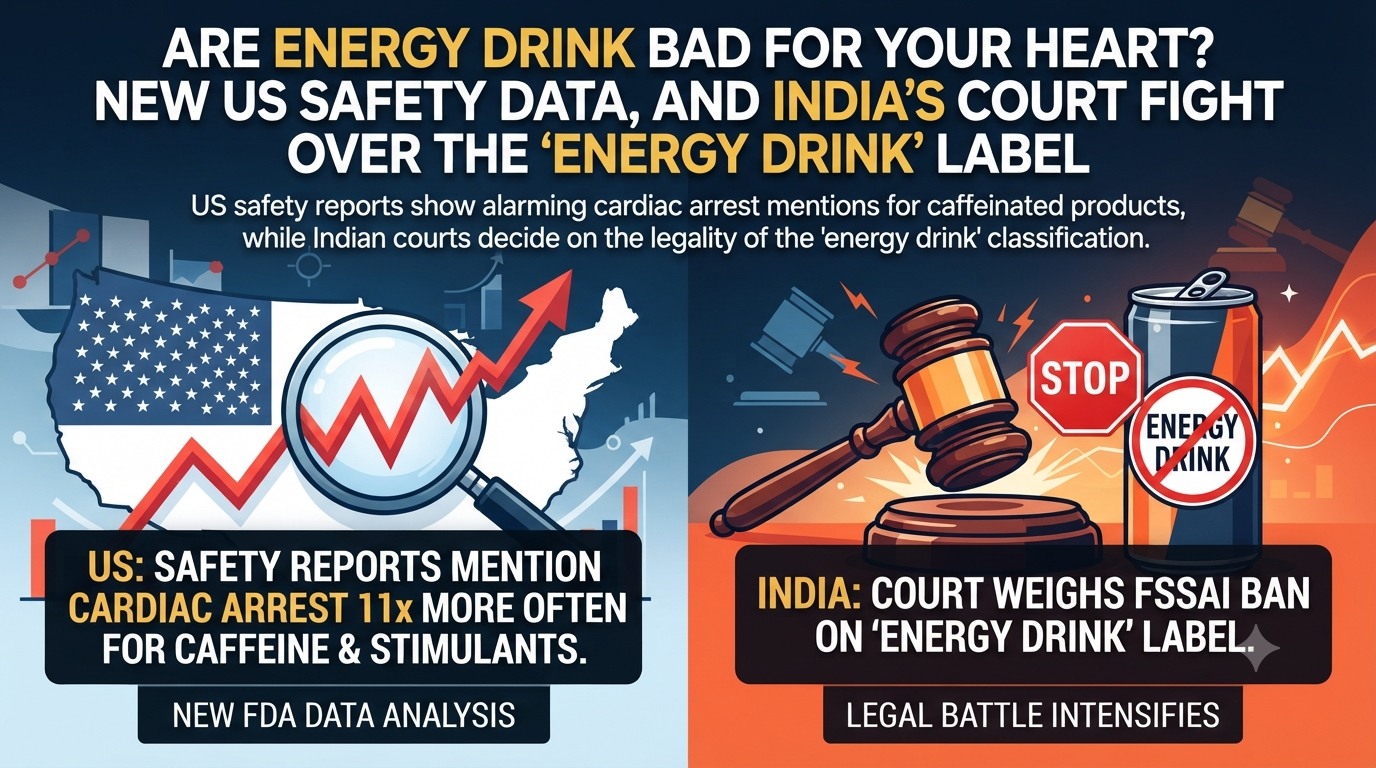
The study found that heart problems were mentioned far more often in US safety reports about caffeine and stimulant products than in reports about other foods and supplements. It was presented as an abstract (MDP0323) at the American Heart Association's Scientific Sessions 2026 in Chicago, held 6 to 9 November.
Researchers at the University of Virginia School of Medicine looked at 28,345 reports made to a US Food and Drug Administration (FDA) safety database between 2017 and 2025, for people aged 13 and over. Of these, 854 involved products containing caffeine or other stimulants, and 27,491 involved products without them, such as soft drinks, smoothies, vitamins, protein bars and meal-replacement shakes.
| Problem mentioned in reports | How much more often with caffeine or stimulant products |
|---|---|
| Cardiac arrest | about 11 times |
| Heart attack | about 4.5 times |
| Abnormal heart rhythm or palpitations | about 4 times |
| Fast heart rate | nearly 3 times |
| Chest pain | 2.71 times |
| Fainting | about 2 times |
About 45% of the reports of heart problems involved adults aged 18 to 34.
Does this prove energy drinks cause heart attacks?
No. The study counted how often problems appeared in reports, not how often they happen to people who drink these products. Reports are sent in voluntarily, so nobody knows how many people drank the products without trouble, or how many had problems that were never reported.
The products were grouped by ingredient, not brand. The stimulant group included energy drinks but also supplements containing ingredients such as synephrine, yohimbine and DMAA. The results are preliminary and had not been published in a peer-reviewed journal when they were presented.
The American Heart Association quoted a cardiologist not involved in the study, Dr Gregory Marcus, who said the findings raise concern but do not prove that caffeine products cause these events.
How much caffeine is safe?
For most healthy adults, up to 400 mg of caffeine a day is generally considered safe, according to the American Heart Association's 2026 scientific statement on caffeine. That is about five 240 ml cups of brewed coffee. Children, pregnant women and people with heart rhythm problems need far less, or none.
Indian rules set a narrower range for drinks. Under FSSAI's standard for caffeinated beverages, a drink must contain between 145 mg and 300 mg of caffeine per litre, state that you should consume not more than 500 ml a day, and warn that it is not recommended for children, pregnant or breastfeeding women, or people sensitive to caffeine.
| Amount of a caffeinated drink sold in India | Caffeine at the legal minimum (145 mg per litre) | Caffeine at the legal maximum (300 mg per litre) |
|---|---|---|
| One 250 ml can | about 36 mg | about 75 mg |
| 500 ml, the labelled daily limit | about 73 mg | about 150 mg |
So the drinks themselves are capped well below 400 mg. The risk comes from adding several cans to tea, coffee and caffeine tablets or pre-workout powders, which are not covered by the drinks standard.
Why is FSSAI fighting the 'energy drink' name?
FSSAI says India has no food standard called 'energy drink', so the name is not allowed on labels. On 30 June 2026 it directed six brands to drop the term: Red Bull, PepsiCo's Sting and Adrenaline Rush, Reliance Consumer Products' Campa Energy Gold Boost, Hell Energy and Monster, as reported by Business Today.
The regulator also objected to claims that these drinks boost energy or focus or help with general weakness, saying such claims are not allowed under existing law. The products can still be sold, but as caffeinated beverages under the existing standard.
Where do the court cases stand?
The cases are still going on. On 29 September 2026 the Delhi High Court set aside FSSAI's order against Red Bull because the company had not been given a hearing. The court left FSSAI free to decide again after hearing Red Bull, and did not rule on whether the name itself is allowed.
PepsiCo's case went differently. On 15 October 2026 the court declined PepsiCo's request for urgent permission to keep making Sting and Adrenaline Rush with 'energy drink' on the label. PepsiCo told the court it had 492 million bottles and 26 million cans with those labels in circulation as of 31 July. Further hearings were listed for 30 October and 5 November; we could not find a public report of their outcome by 16 November.
Do energy drinks matter for weight management?
They can, mainly through sugar. Regular versions are sweetened with sugar, and a daily can adds up over a month. Check the 'total sugars' and energy lines on the label, and remember that sugar-free versions still contain the same caffeine.
Caffeine is not a tool for weight management. We do not rate energy drinks, so there are no NutriPedia product ratings for this story. For drinks that fit a daily calorie plan, our diet planner shows how much room you have.