What is Maharashtra asking the court?
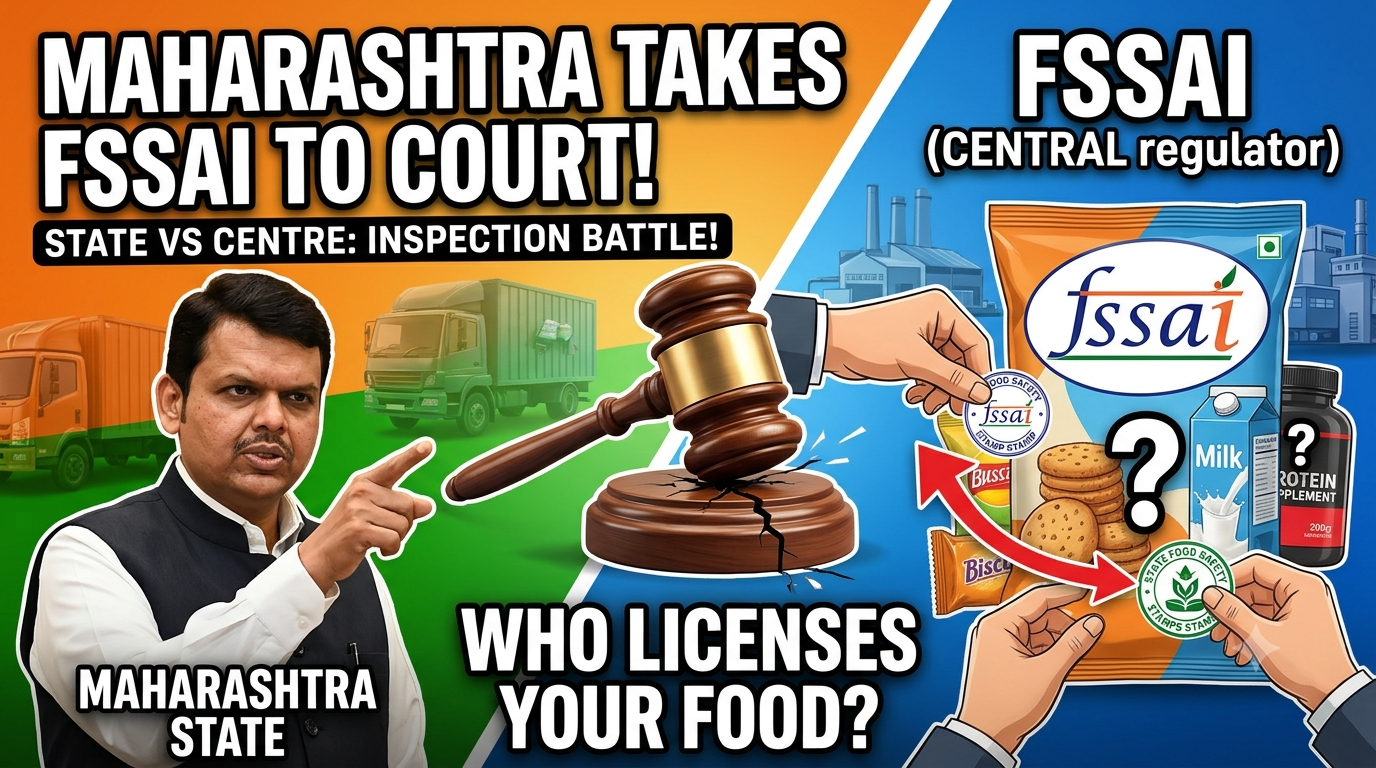
Maharashtra's government has filed a writ petition in the Bombay High Court against the Union government and the Food Safety and Standards Authority of India (FSSAI), ThePrint reported on 26 October 2026. The petition was filed through the state's Commissioner of Food Safety, Tukaram Mundhe, who also heads Maharashtra's Food and Drug Administration.
The state argues that FSSAI has set up a parallel central system for licensing and inspecting food businesses that the Food Safety and Standards Act, 2006 never intended. In its reading, the Act gives enforcement to state food safety commissioners and their officers, and FSSAI's chief executive cannot use the Act's provisions to run a separate central licensing and enforcement machinery.
Which rules does the petition challenge?
According to ThePrint and the Free Press Journal, the petition targets:
- Provisions of the 2011 licensing and registration regulations that create a "central licensing authority".
- The 2018 recruitment regulations and the posts of central food safety officer created under them.
- An FSSAI order of 12 May 2023 that gives routine and complaint-based inspections of centrally licensed businesses to central officers.
- The March 2026 amendment to the licensing rules and FSSAI's order of 13 March 2026 setting new turnover limits.
- The national online licensing portal, FoSCoS, which the state wants replaced by its own platform for businesses it licenses.
The state also argues that the new turnover limits were set without first inviting public objections, which it says the General Clauses Act requires.
How does food licensing work now?
Every food business in India needs either a registration or a licence, depending mainly on its yearly turnover. FSSAI's order of 13 March 2026 set these limits from 1 April 2026:
| Yearly turnover | What the business needs | Who issues it |
|---|---|---|
| Up to Rs 1.5 crore | Registration | State or local registering authority |
| Above Rs 1.5 crore, up to Rs 50 crore | State licence | State licensing authority |
| Above Rs 50 crore | Central licence | FSSAI's central licensing authority |
Before this change, a central licence was needed above Rs 20 crore and registration covered businesses up to Rs 12 lakh, according to law firms' summaries of the order. So the 2026 limits actually moved some businesses from central to state licences. Maharashtra's objection is less about where the line is drawn and more about how it was set and what happens above it.
Why does the 2023 inspection order matter?
Under FSSAI's 2023 order, central food safety officers carry out the regular and complaint-based inspections of businesses with central licences. State officers help when asked and may act on their own only in specified cases, such as a food safety incident or emergency.
The large food and supplement makers that sell across India usually hold central licences. Maharashtra wants its officers to be able to enforce the law against them, not only enter and inspect their premises. As interim relief, it has asked the court to pause the 2023 order and to treat central licences as state licences for enforcement.
What has FSSAI said?
Neither report carried a response from FSSAI or the Union Health Ministry, and we found no public statement from them. We will add their position when it is filed in court or made public.
What happens next?
A division bench led by Chief Justice Mahesh Chandra Tripathi has listed the petition for hearing on 26 November 2026, the Free Press Journal reported. The court may decide on interim relief first; a final ruling on whether the regulations are valid could take longer.
If Maharashtra wins, state officers could inspect and act against centrally licensed companies in the state, and other states could make similar claims. If FSSAI's system stands, inspections of large companies stay with central officers.
What do NutriPedia's ratings check?
Whoever issues the licence, our product ratings check that the label shows an FSSAI licence number. A product without one has its overall rating capped at 2.0, however well it does on taste, price or ingredients. We check the label, not the inspection record, so this case does not change how we rate products.