What did the FDA publish?
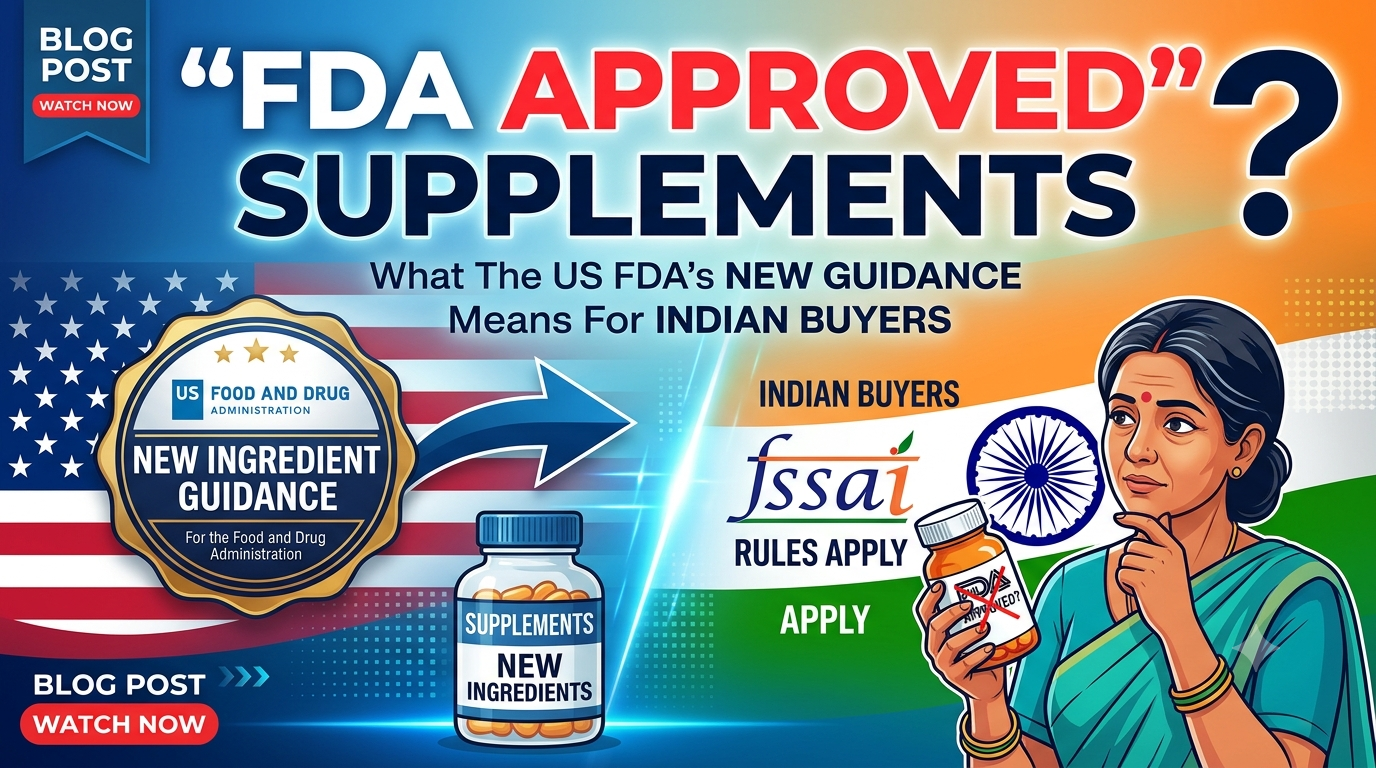
On 19 October 2026 the US Food and Drug Administration published final guidance on what companies should tell it before selling a dietary supplement that contains a new dietary ingredient, one that was not sold in the US before October 1994.
US law requires the company to notify the FDA at least 75 days before such a product goes on sale and to explain why it can reasonably be expected to be safe. The new guidance finalises three parts of a 2016 draft: how to describe the ingredient, how to use its history of use as evidence, and how to summarise the safety case. Other parts of the draft remain in draft. The guidance gives the FDA's recommendations; it does not create a new approval process.
What safety evidence does the FDA expect?
- History of use. If a company relies on history of use alone, the FDA generally expects at least 25 years of widespread use. A shorter history can work with other evidence, and traditional medicine use can count when it is well documented.
- Laboratory and computer methods. Alongside animal and human studies, the FDA now discusses laboratory tests on cells and computer modelling as possible evidence. It does not always ask for human trials, but may suggest them when other data are not enough.
- One safety story. A single safety narrative replaces the separate "comprehensive safety profile" of the 2016 draft, which law firm Covington describes as reducing duplication.
What does it say about herbal extracts and probiotics?
The identity section asks companies to describe exactly what the ingredient is: how it is made, which marker compounds it is standardised to, how batches are kept the same, what impurities it may contain and what its specifications are. There are specific recommendations for botanicals, extracts and concentrates, and for live microbes such as probiotics.
This matters because a plant extract can vary widely depending on the plant part, the solvent and the process. The same name on two labels does not always mean the same ingredient.
How did the industry react?
The Council for Responsible Nutrition, a US supplement industry group, said it was disappointed with the 25-year benchmark, NutraIngredients reported. According to Nutritional Outlook, the group also objected to the FDA still asking for safety information about the other ingredients in a finished supplement. Law firms note open questions remain, such as when an ingredient counts as new and when a notification is needed.
Does the FDA approve supplements?
No. Unlike medicines, supplements in the US do not need FDA approval before they are sold. For a new ingredient, the FDA reviews the notification and can raise objections, but a notification is not an approval. Registration with the FDA means a facility is on the FDA's list; it does not mean its products are approved.
So "FDA approved" on a supplement is misleading, and "made in an FDA-registered facility" tells you little about the product.
How does India handle new supplement ingredients?
India works differently. FSSAI's 2016 regulations for health supplements and nutraceuticals list the vitamins, minerals, plants and other ingredients these products may contain. An ingredient not on those lists needs FSSAI's prior approval under the 2017 regulations for non-specified foods and food ingredients before it can be used or imported.
| Question | United States (FDA) | India (FSSAI) |
|---|---|---|
| Is a supplement approved before sale? | No | No, but its ingredients must be on FSSAI's permitted lists |
| What about a new ingredient? | Notify the FDA 75 days before sale | Get FSSAI's approval before use or import |
| What must the label show? | A supplement facts panel | An FSSAI licence number, among other details |
What does NutriPedia check?
Our product ratings cap any product without an FSSAI licence number on the label at 2.0 out of 5, wherever it is made. Our evidence rating compares the amount of each active ingredient with the amounts used in studies; an FDA notification does not count as evidence that a product works.
What should I check before buying an imported supplement?
- An FSSAI licence number, usually on an importer's sticker for imported products.
- The full ingredient list, with amounts for each active ingredient.
- For plant extracts, the plant part and how much raw plant each dose comes from.
- No "FDA approved" claim; a seller using it is giving you a wrong impression.