Why is protein suddenly everywhere in India?
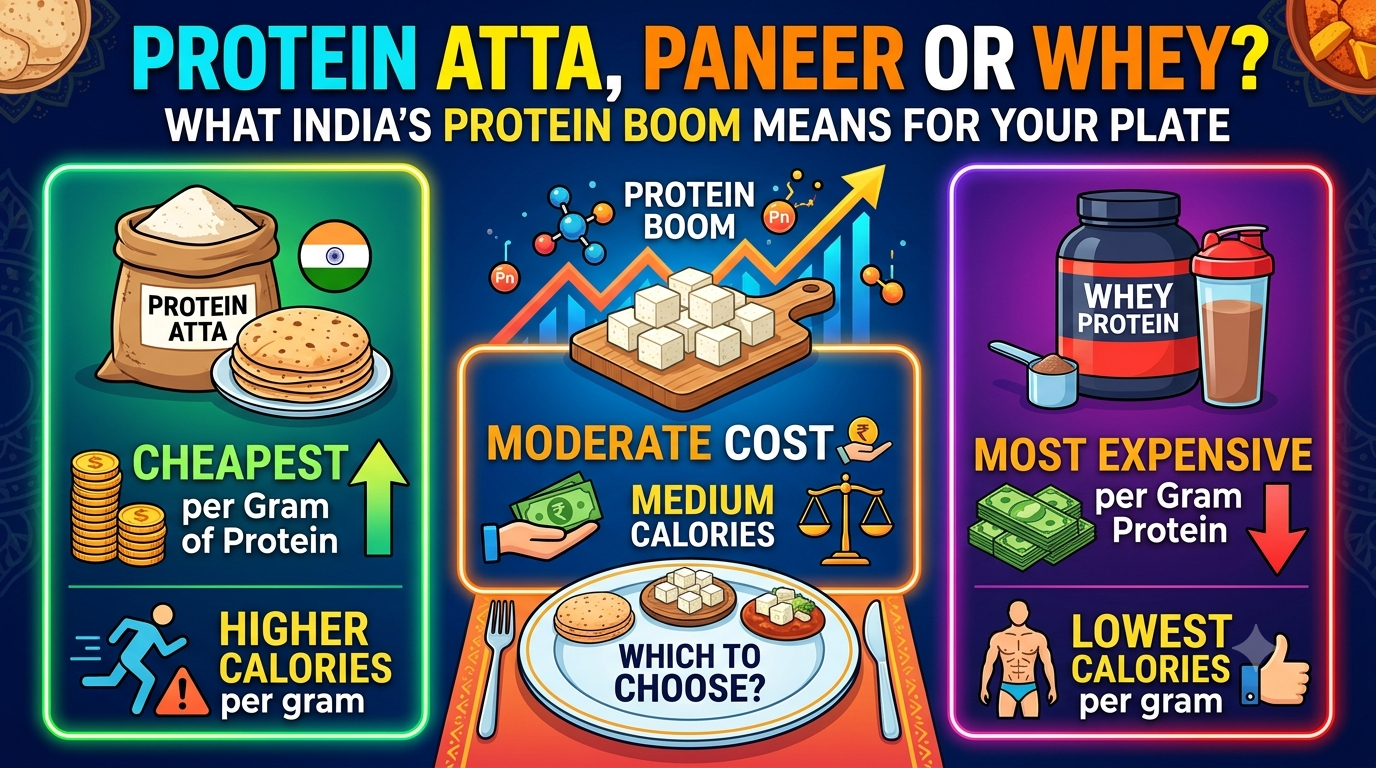
Protein has become a selling point well beyond the gym, according to an Ingredients Network analysis published on 20 October 2026. Early growth came from whey powders bought by better-off fitness users. The faster-growing products now are cheaper and closer to everyday meals: protein-enriched atta, paneer, tikkis and soya chaap.
The analysis quotes Vidit Dugar of the investment firm Sauce, who says cereals still supply nearly half the protein Indians eat. About four in ten Indians are vegetarian, and India imports much of its whey, so foods that fit an Indian vegetarian plate have room to grow.
Is fortified atta better value than whey?
It depends on what you are paying for. Dugar's comparison found a protein-enriched atta cost about one-eighth as much as a whey powder for the same amount of protein, but brought several times the calories with each gram of protein.
For someone managing their weight, the calories matter as much as the price. The simplest way to compare is grams of protein per 100 kcal: protein (g) ÷ calories (kcal) × 100, both taken from the same row of the nutrition panel.
The table shows how this works with example label values. They are illustrations, not measurements of any brand, so use the numbers on your own pack.
| Food (example label) | Protein per 100 g | Energy per 100 g | Protein per 100 kcal |
|---|---|---|---|
| Whey powder | 75 g | 380 kcal | 19.7 g |
| Paneer | 18 g | 290 kcal | 6.2 g |
| Protein-fortified atta | 18 g | 350 kcal | 5.1 g |
| Ordinary whole wheat atta | 12 g | 340 kcal | 3.5 g |
In this example, the fortified atta gives about half as much protein again per 100 kcal as ordinary atta, but nearly four times less than whey. A roti made from it is still mostly carbohydrate.
How does NutriPedia score protein?
Our dish ratings use exactly this measure. Protein makes up 25% of a dish's score, and a dish gets full marks for protein at 10 g or more per 100 kcal. We measure per 100 kcal, not per 100 g, so that dry, dense foods do not look better than water-rich ones like dal simply because they contain less water.
By that yardstick, a fortified atta helps a roti a little, but it does not turn it into a high-protein food. Dal, curd, eggs, chana, paneer and soya, eaten as part of the meal, usually do more for protein per 100 kcal than switching flour.
How much protein do adults need?
ICMR-NIN's Dietary Guidelines for Indians (2024) recommend 0.83 g of protein per kg of body weight a day for healthy adults. For a 60 kg adult that is about 50 g a day. The guidelines advise against protein powders for most people and note that the benefit of extra protein for muscle building levels off at about 1.6 g per kg a day, even with resistance training.
Many Indians do fall short, mainly because cereals supply so much of their protein. The answer the guidelines give is more pulses, milk, curd, eggs, nuts and seeds, not a tub of powder.
Can you trust protein labels?
Not always. In a self-funded 2024 study, the Citizens Protein Project, doctors in Kerala tested 36 protein supplements sold in India (Philips 2024). They found:
- 25 of the 36 (69%) had less protein than the label claimed, some by more than half.
- 5 (14%) contained aflatoxins, toxins made by moulds.
- 3 had traces of pesticides.
- Some products had more protein than claimed, which the authors said could mean cheaper amino acids had been added to raise the protein figure; they did not confirm this.
The Ingredients Network piece puts the share of mislabelled products at 76%; the study itself reports 69% (25 of 36). The study measured protein through nitrogen, which can be raised by added amino acids, and it did not test the herbal extracts named on labels. Its findings were widely reported and led to calls for stricter checks.
The same analysis notes that independent testing groups now check protein products and publish results, and Dugar suggests this public scrutiny may push brands towards honest labels faster than regulation.
How should I use protein foods for weight management?
- Swap, do not add. A protein atta roti or a paneer dish helps only if it replaces something you already eat.
- Check protein per 100 kcal, not just "high protein" on the front of the pack.
- Start with everyday foods. Dal, curd, eggs, chana, rajma and soya chunks are low-cost sources of protein.
- If you buy a powder, check the FSSAI licence number, the protein per serving, and whether an independent test report is available.