What did the trial test?
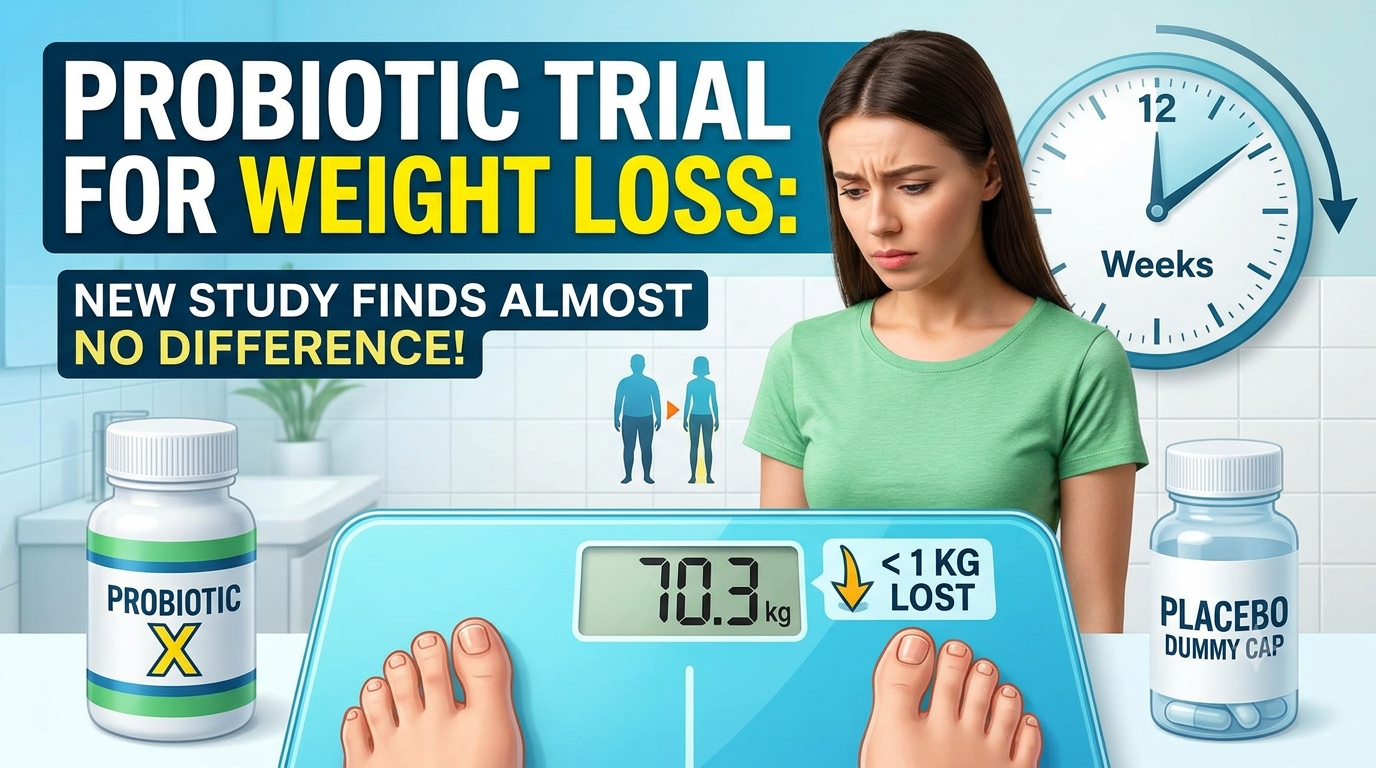
Researchers from Sun Yat-sen University and Zhongshan City People's Hospital in China gave 110 adults aged 40 to 65 with metabolic syndrome either a probiotic capsule or a dummy capsule once a day after a meal for 12 weeks. Neither the participants nor the researchers knew who took which. The probiotic capsule held 5 billion live bacteria (colony-forming units) of one strain, Lactiplantibacillus plantarum J26. The study appeared in npj Science of Food.
Metabolic syndrome is a cluster of risks, including a large waist, high blood pressure, high blood sugar and unhealthy blood fats, that together raise the chance of heart disease and type 2 diabetes. It is common in India, so the question the trial asks matters here too.
What did it find?
Average weight in the probiotic group went from 71.5 kg to 70.6 kg, a fall of about 0.97 kg. In the dummy capsule group it went from 69.7 kg to 69.4 kg, a fall of about 0.22 kg. The difference between the groups was about 0.75 kg after three months.
In the probiotic group, BMI fell by 0.29, waist size by 1.9 cm and body fat by 0.87 percentage points, changes the researchers report as significant.
Triglycerides, total cholesterol and LDL cholesterol moved slightly in the right direction, but the differences from the dummy capsule were not statistically significant. There was no clear effect on fasting blood sugar, HbA1c, insulin or blood pressure.
Why did some people respond more than others?
People who responded had better diets at the start: a higher score on a Chinese healthy eating index, more protein and fibre, and less fat. Their gut bacteria also changed more, with more Lactobacillus, Bacteroides and Anaerobutyricum. The researchers' analysis linked much of the weight change to the rise in Lactobacillus.
These links come from analysis after the trial, not from a test designed to prove them, so they suggest an idea rather than show cause and effect. They fit with a simple point: a probiotic works, if at all, alongside the food that feeds the bacteria already in your gut.
How does this compare with earlier research?
This result is in line with what earlier studies found. A review of 15 trials with 957 adults with overweight or obesity found that probiotics led to 0.6 kg more weight lost than dummy capsules over 3 to 12 weeks, and a BMI 0.27 lower; the reviewers called these effects small (Borgeraas 2018).
So the J26 trial adds one more well-run study showing a real but small effect on weight, and no clear effect on blood fats, blood sugar or blood pressure in this period.
What are the limits of this study?
- It tested one strain at one dose. Probiotic effects belong to the specific strain, so results for J26 do not tell you about other probiotics.
- All participants were middle-aged Chinese adults with mild metabolic problems. The researchers suggest that people with more severe problems, a longer trial or a higher dose might show more.
- It lasted 12 weeks, so we do not know whether the small change lasts.
- BioGrowing, a Shanghai company that makes the strain, supplied all the study materials.
What is NutriPedia's view?
We do not rate probiotic products yet. Our dish ratings give the most credit to foods with more protein and fibre per 100 kcal, because these help you feel full, and the responders in this trial were the people already eating more of both. For weight management, regular meals with dal, vegetables, whole grains and enough protein will do far more than a capsule. You can see how your usual meals add up in our diet planner.